
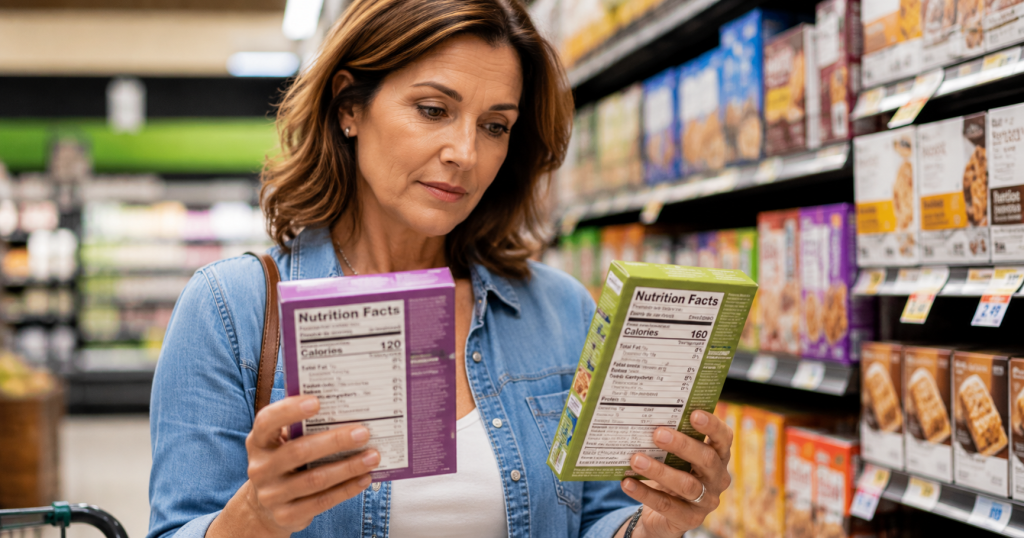
Have you ever picked up a package labeled “natural,” “whole grain,” or “low fat” and assumed it was a healthy choice? Food packaging is designed to grab your attention, but the front of the package doesn’t always tell the whole story.
Learning how to read nutrition labels can help you identify hidden sugars, manage sodium intake, compare products, and make more informed choices for your long-term health. Once you know what to look for, grocery shopping becomes much less confusing.
Healthy Grocery Shopping Starts Here: How to Read Food Labels
Food manufacturers are excellent marketers. Bright packaging, attractive claims, and words like natural, multigrain, or made with real fruit can make a product seem healthier than it really is. These front-of-package claims aren’t regulated the same way nutrition facts are, so they’re designed to catch your eye and shape your perception—not necessarily to give you the full picture.
The best way to know what’s actually inside a food isn’t the front of the package but the Nutrition Facts label and ingredient list on the back. This is where the real story lives: total sugars versus added sugars, serving sizes that may be smaller than you’d expect, and ingredients listed by weight, from most to least. A product can be labeled “low fat” or “no sugar added” and still be high in refined carbs, sodium, or hidden sweeteners under names you wouldn’t immediately recognize as sugar.
Learning to read food labels is one of the simplest skills you can develop to support healthy aging, weight management, heart health, and balanced blood sugar. This is especially true during perimenopause and menopause, when the body becomes more sensitive to added sugar and its effects on weight, energy, and hormone balance. A few extra seconds spent flipping a package over can make a meaningful difference over time.
In the sections below, we’ll break down exactly what to look for, starting with how to spot added sugars hiding under unfamiliar names, how to understand serving sizes, and how to identify which ingredients matter most for your health.
What to Look for on a Food Label
At first glance, a Nutrition Facts label can seem overwhelming. The good news is you don’t have to memorize every detail. By focusing on a few key areas, you can quickly determine whether a product is a healthy choice or one that’s loaded with hidden ingredients. Also, becoming familiar with the updated Dietary Guidelines for Americans (DGA) should help you identify ingredients and the right portions of an overall healthy diet.
In the sections below, we’ll break down exactly what to look for, starting with how to spot added sugars hiding under unfamiliar names, how to understand serving sizes, and how to identify which ingredients matter most for your health.
1. Spot Hidden Sugars
One of the biggest challenges when reading food labels is that sugar isn’t always listed as simply “sugar.” Manufacturers use dozens of different names for added sweeteners, making them easy to overlook.
Some of the most common include:
- Cane sugar
- Brown sugar
- Corn syrup
- High-fructose corn syrup
- Dextrose
- Fructose
- Maltose
- Rice syrup
- Fruit juice concentrate
- Molasses
The more familiar you become with these names, the easier it is to identify products that may contain more added sugar than you realize.
2. Check the Serving Size
Before looking at calories or nutrients, check the serving size.
Many packaged foods contain two or three servings, even though most people eat the entire package. If you eat twice the serving size, you’re also consuming twice the calories, added sugars, sodium, and other nutrients listed on the label.
Serving size provides the context for everything else on the Nutrition Facts panel, making it one of the first things you should review.
3. Read the Ingredient List
Ingredients are listed in descending order by weight, meaning the ingredient used in the greatest amount appears first. Look at the first few ingredients. If added sugar — or one of its many aliases — appears near the top of the list, the product likely contains a significant amount of added sugar.
A shorter ingredient list with recognizable, whole-food ingredients is often a good sign, although simplicity alone doesn’t guarantee a product is healthy. The goal is to understand what’s in your food so you can make informed choices.
Understand Total Sugars vs Added Sugars
This is one of the most important sections on today’s Nutrition Facts label.
Total Sugars include both naturally occurring sugars and added sugars. Naturally occurring sugars are found in foods like fruit and milk, which also provide vitamins, minerals, fiber, or protein.
Added Sugars are sweeteners added during processing. These contribute extra calories without providing the same nutritional benefits as whole foods. For most women, the American Heart Association recommends limiting added sugar to no more than 25 grams (about 6 teaspoons) per day.
Remember the Sodium too!
Sugar often gets the spotlight, but sodium deserves attention too. Many foods that don’t taste salty, such as bread, canned soups, sauces, frozen meals, and salad dressings, can contain surprisingly high amounts of sodium. Most adults should aim for less than 2,300 milligrams of sodium per day. Reading labels can help you compare products and choose lower-sodium options when available
Ignore the Marketing on the Front of the Package
Always remember, from the color scheme, to the fonts, images, words used, and everything in between, the front of a package is designed to sell the product.
Terms such as:
- Natural
- Low fat
- Whole grain
- Light
- Organic
- Multigrain
None of these automatically mean a food is low in sugar, sodium, or calories. Always turn the package over and read the Nutrition Facts label before making your decision.
Read the Ingredients List
Ingredients are listed in descending order by weight.
If sugar (or one of its many aliases) appears near the beginning of the list, the product likely contains a significant amount of added sugar. The ingredients at the bottom of the list are in lesser quantity.
Some common sugar names include:
- Cane sugar
- Brown sugar
- Corn syrup
- High-fructose corn syrup
- Dextrose
- Fructose
- Maltose
- Rice syrup
- Fruit juice concentrate
- Molasses
Learning to recognize these names makes it much easier to identify foods that may not be as healthy as they appear.
You may be surprised to learn that added sugar can appear under more than 60 different names on ingredient labels. Yes, 60+! While it’s helpful to recognize the most common ones, remembering them all isn’t realistic. That’s exactly why I created the Hidden Sugar Decoder Guide: a practical reference that helps you identify hidden sugars, understand ingredient lists with confidence, and make healthier choices every time you shop. If reducing your sugar intake is one of your goals, it’s a resource you’ll find yourself reaching for again and again. This guide will make your shopping a lot easier. Give it a try!
Compare Similar Products
One of the easiest ways to improve your diet is to compare two similar products.
Choose the one with:
- Less added sugar
- Lower sodium
- More fiber
- Higher protein (when appropriate)
- Shorter ingredient list
Small improvements made consistently over time can add up to meaningful health benefits.
Keep It Simple
You don’t have to memorize every nutrition label. Start by asking yourself these five questions:
- What is the serving size?
- How much added sugar does it contain?
- How much sodium is in one serving?
- What are the first few ingredients?
- Is there a healthier option sitting right beside it?
The more you practice, the faster reading labels becomes.
The Bottom Line
Food labels are one of your best tools for making informed choices. They help you look beyond marketing claims and understand what you’re really putting into your body. Learning to identify added sugars, watch your sodium intake, and compare similar products doesn’t require perfection… just awareness. Every healthier choice you make today is an investment in your long-term health.
Reviewed by Coach Tammy
Coach Tammy Bar is a Certified Life Coach, Health Coach, Type 2 Diabetes Educator, and Humanistic Psychology Counselor with over 25 years of experience in health promotion through education.
She coaches women to improve their energy, metabolic health, and sustain healthy lifestyle habits. She helps women navigate midlife transitions, including blood sugar balance, hormone health, weight management, and lifestyle strategies that promote long-term vitality. Her approach combines science-based nutrition, behavioral psychology, and practical daily routines designed for real life.
Through TBHealthy, Coach Tammy educates women simplify health decisions and build habits that support energy, clarity, and resilience during hormonal changes such as perimenopause and menopause.
Medical Disclaimer: This article is for educational purposes only and does not replace personalized medical advice. Always consult your healthcare provider regarding medical conditions or treatment decisions.
Frequently Asked Questions Re: Food Labels and Hidden Sugar
What should I look at first on a food label?
Start with the serving size. Everything else on the Nutrition Facts panel is based on that amount, so it’s important to know how much you’re actually eating.
What’s the difference between total sugars and added sugars?
Total sugars include both naturally occurring sugars (such as those found in fruit and milk) and sugars added during processing. Added sugars are the ones you should aim to limit.
Are foods labeled “natural” always healthy?
Usually, no. Words like “natural” or “low fat” don’t guarantee a product is low in added sugar, sodium, or calories, which is why it’s so important to learn to read labels and check the ingredient list and Nutrition Facts before deciding what products to buy.
Why is sodium important if I’m mainly watching sugar?
Too much sodium may contribute to high blood pressure and heart disease. Many packaged foods contain high amounts of sodium even if they don’t taste especially salty. Learn to identify values, what is above the daily recommended intake and what is too much sodium.
How can I make healthier choices at the grocery store?
Compare similar products and choose the one with less added sugar, lower sodium, more fiber, and a simpler ingredient list whenever possible.
Where can I learn more about hidden sugars?
If you’d like extra guidance, I invite you to explore my Hidden Sugar Decoder Guide, where you’ll learn to recognize dozens of different names for added sugar on ingredient lists. You may also enjoy the 3-Day Sugar Reset, a simple program designed to help you reduce added sugar, build healthier habits, and support your energy, hormones, heart health, and overall well-being. These resources work hand in hand with the information in this article to help you feel more confident every time you shop for groceries.