
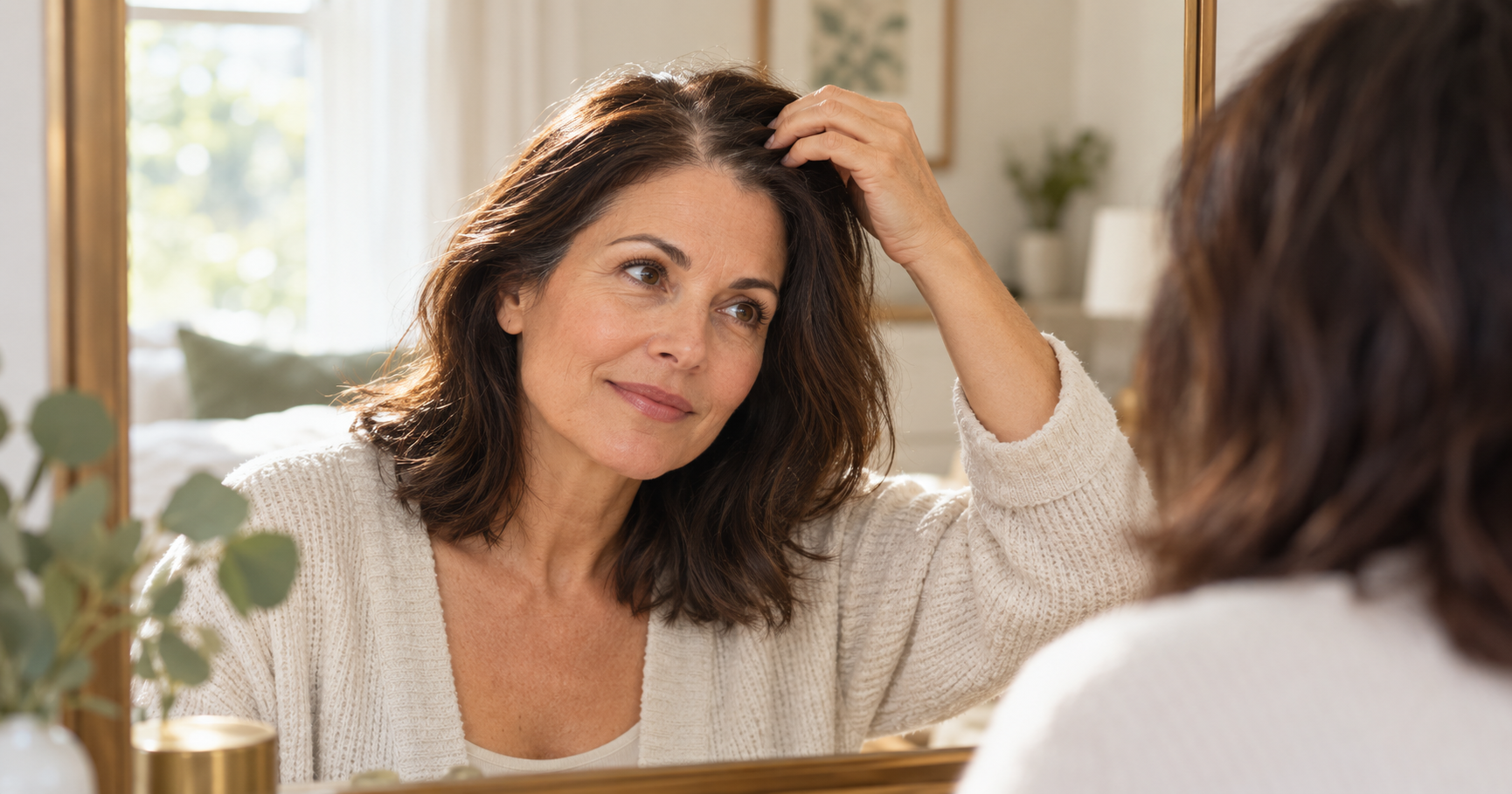
Finding more hair in your brush or noticing a wider part can be unsettling, especially when it happens alongside other midlife changes. Perimenopause and menopause can play a role in hair thinning, but this new season of life alone cannot tell you what is causing it.
The pattern of hair loss offers useful clues. Gradual thinning, sudden shedding, and patchy hair loss can have different causes and need different approaches. This blog will serve you as a guide to explain what to look for, which health issues to discuss with a clinician, and which treatments have evidence behind them.
Why does hair change around menopause?
You may first notice it while styling your hair: your ponytail feels smaller, your part looks wider, or your scalp shows through more than it used to. These changes can affect your confidence. They also deserve more than a quick recommendation for a “hair growth” shampoo.
Hair loss has several possible causes. Female pattern hair loss becomes more common after menopause, and hormonal changes may contribute. Yet thyroid problems, low iron, illness, nutritional gaps, medications, and scalp conditions can also affect hair. More than one cause can be present at the same time.
The useful first question to ask yourself is: Am I seeing gradual thinning, increased shedding, or distinct patches of hair loss? You do not need to diagnose yourself. Describing what you see gives your healthcare professional a better place to start.
Gradual thinning: Female pattern hair loss
Female pattern hair loss often develops slowly. You might see a widening part, less density over the top of your head, or a smaller ponytail. Individual hairs can become finer and more fragile over time. The American Academy of Dermatology notes that this type of hair loss is more common after menopause, although hormones are only part of the picture.
It can be tempting to assume that lower estrogen is the entire explanation. The relationship between menopause and hair follicles is more complex, and a change in hormone levels does not confirm a diagnosis. A dermatologist can examine your scalp and distinguish female pattern hair loss from other conditions that may look similar. Early assessment matters because treatment can help preserve hair density, and sometimes may even improve it.
What to notice: Is the part gradually widening? Does the top of your scalp look thinner in photographs taken months apart? Have you noticed a similar pattern in relatives? These details can help your doctor understand your particular situation during an appointment.
Sudden shedding: Look back a few months
Shedding is different from gradual thinning. You may notice much more hair than usual coming out during washing or brushing, with loss spread across the scalp. Dermatologists call one common form of excessive shedding telogen effluvium. It can follow a physical or emotional stressor, such as a significant illness, surgery, substantial weight loss, or a stressful life event. Stress, after all, can affect us in many ways, and the scalp is also sensitive to it.
When you think about possible triggers, look beyond what happened this week. Hair shedding can become noticeable after the event that set it off. It is also possible to have temporary shedding on top of female pattern hair loss, making a gradual change seem suddenly worse. In other words, hair loss can happen for a variety of reasons and sometimes at the same time.
Try making a short timeline before your doctor’s visit. Try to remember and take notes of when the shedding began, any illnesses or major life changes, changes in eating or weight, and any new or discontinued medications. This is more useful than trying to count every strand.
Heavy periods and low iron during perimenopause
If you are still having periods, changes in bleeding are relevant to the hair conversation. Heavy menstrual bleeding can contribute to low iron, and iron deficiency may be associated with increased shedding. A clinician can assess whether blood tests, such as a complete blood count and iron studies, are appropriate for you.
Do not start a high-dose iron supplement solely because your hair is shedding. Iron needs and treatment depend on your test results and medical history. If your periods have become unusually heavy, bring up the bleeding itself rather than treating the hair change as the only concern.
Food can support adequate iron intake. Meat, poultry, fish, beans, lentils, and some fortified foods are options, depending on how you eat. Nutrition supports hair health, but a meal plan alone may not correct an established deficiency or address another cause of hair loss.
Could it be your thyroid?
An underactive or overactive thyroid can disrupt the hair growth cycle and lead to more diffuse shedding. Symptoms such as unusual fatigue, weight changes, or changes in heart rate may offer additional clues, but symptoms can overlap with other midlife concerns. Hair loss by itself cannot tell you whether your thyroid is the cause. A healthcare professional can decide whether thyroid testing makes sense for you. This is one reason to avoid labeling every new symptom “just menopause.” An accurate diagnosis can reveal an issue that has its own treatment.
When your scalp needs closer attention
A widening part and extra shedding are not the only patterns to watch for. Round patches, a receding hairline, or hair loss accompanied by itching, dandruff, pain, redness, or visible scalp changes warrant a professional assessment. Some forms of hair loss involve inflammation or scarring and need different treatment from female pattern hair loss.
Styling practices can matter, too. Hairstyles that repeatedly pull on the hair may cause traction alopecia. If a style feels tight or painful, easing that tension is a practical step you can take now while you arrange an evaluation.
What can actually help…
Start with the cause. A clinician or dermatologist may ask about your family history, periods, diet, medications, recent health events, and the timing of the hair change. They may examine your scalp and recommend testing when your history or symptoms suggest another condition. The treatment plan depends on what that assessment finds.
For female pattern hair loss, topical minoxidil is an FDA-approved, nonprescription treatment for women. It takes consistent use, time and patience, and a dermatologist can help you decide whether it is suitable. Other treatments may be considered for some women, but they have different risks and require an individual discussion.
For shedding linked to an underlying issue, addressing that issue is central. That might mean treating a thyroid condition, correcting confirmed iron deficiency, or reviewing a possible trigger with your clinician. Visible improvement can take time because hair grows gradually.
Be cautious with supplements marketed specifically for hair growth. Evidence for products such as biotin is inconsistent when there is no deficiency, and getting too much of certain nutrients can worsen hair loss. High-dose biotin can also interfere with some laboratory tests, including thyroid tests. Tell your healthcare team about any supplements you take before testing.
Always consider that taking too many vitamins can lead to vitamin toxicity (hypervitaminosis), causing disruptions that range from mild digestive upset to serious and permanent damage to certain organs. The severity of the disruption largely depends on whether the vitamin is fat-soluble (stored in the body) or water-soluble (excess is usually flushed out).
Can too many vitamins affect your hair?
More is not always better, especially with supplements marketed for hair health.
- Vitamin A: Taking too much preformed vitamin A over time can contribute to hair loss, along with dry skin and other health problems. The concern is mainly with high-dose supplements containing vitamin A as retinol or retinyl esters, rather than vegetables that provide beta-carotene. Check the labels of any hair supplement and multivitamin you take so you do not unintentionally combine high doses.
- Vitamin E: The American Academy of Dermatology states that getting too much vitamin E from supplements has been linked to hair loss, although the evidence does not clearly explain how it happens. High-dose supplements can also increase bleeding risk, especially for people taking blood thinners. Check the vitamin E amount in hair supplements and multivitamins before combining them.
- Iron: Low iron can contribute to hair shedding, but it’s best to confirm a deficiency before taking an iron supplement. High doses can cause constipation, nausea, or vomiting. A severe overdose is a medical emergency that can cause bloody stools and liver damage. Ask your healthcare professional whether you need iron and what dose is appropriate for you.
- Biotin (vitamin B7): A biotin deficiency can cause hair thinning, but deficiency is rare, and there is little evidence that taking extra biotin improves hair growth when you already get enough. High-dose biotin is not known to cause hair loss, but it can make some blood test results inaccurate, including tests used to check thyroid function. Tell your healthcare professional if you take it, especially before testing for possible causes of hair loss. Biotin is worth a mention here not because excess biotin is an established cause of hair loss, but because it is commonly included in hair supplements and can complicate or alter testing results.
To avoid “supplement stacking” or accidentally combining multiple products that contain the same nutrients, always check the labels against the Tolerable Upper Intake Levels (UL) or consult a healthcare professional for a blood test.
Thus, if you take a hair supplement and a multivitamin, compare their labels. Both may contain the same nutrients, and the amounts can add up. A healthcare professional can help you assess the combined doses and decide whether any testing is appropriate. Too much of certain nutrients may contribute to hair loss, but a supplement label alone cannot establish what is causing yours.
Finally, treat your hair gently while you investigate. Avoid styles that pull, and choose care routines that reduce breakage. These habits can protect the hair you have, though they cannot replace treatment for an underlying medical or scalp condition.
The Bottom Line
Hair loss during perimenopause or menopause is real, but its cause is not always menopause itself. A slowly widening part may suggest female pattern hair loss; sudden, widespread shedding may point toward a recent trigger or a health issue. Iron deficiency, thyroid disorders, and scalp conditions are among the possibilities worth considering with a professional.
You do not have to guess your way through expensive products. Write down what has changed, take a few dated photos if helpful, and seek an assessment, especially if the loss is rapid, patchy, persistent, or accompanied by scalp symptoms. The right next step begins with knowing which kind of hair loss you have.
Reviewed by Coach Tammy
Coach Tammy Bar is a Certified Life Coach, Health Coach, Type 2 Diabetes Educator, and Humanistic Psychology Counselor with over 25 years of experience in health promotion through education.
She coaches women to improve their energy, metabolic health, and sustain healthy lifestyle habits. She helps women navigate midlife transitions, including blood sugar balance, hormone health, weight management, and lifestyle strategies that promote long-term vitality. Her approach combines science-based nutrition, behavioral psychology, and practical daily routines designed for real life.
Through TBHealthy, Coach Tammy educates women simplify health decisions and build habits that support energy, clarity, and resilience during hormonal changes such as perimenopause and menopause.
Medical Disclaimer: This article is for educational purposes only and does not replace personalized medical advice. Always consult your healthcare provider regarding medical conditions or treatment decisions.
Frequently Asked Questions RE: Hair Loss in Menopause
Is hair loss normal during menopause?
Hair thinning becomes more common after menopause, but “common” does not identify the cause. Gradual thinning may be female pattern hair loss; increased shedding may have another trigger. A dermatologist can help distinguish them and give you solutions for your specific situation.
Will my hair grow back after menopause?
Some types of shedding improve after the trigger is addressed. Female pattern hair loss generally calls for ongoing management, and treatment results vary from woman to woman.
Can low iron cause hair loss in perimenopause?
Low iron may contribute to hair shedding, particularly if you have heavy periods, as it is the case during perimenopause. Ask a clinician whether testing is appropriate before taking iron supplements.
How can I tell shedding from female pattern hair loss?
Shedding often appears as a noticeable increase in hairs coming out across the scalp. Female pattern hair loss tends to develop gradually, often with a widening part or thinning over the top of the head. Both can occur together, so a professional assessment is useful when the pattern is unclear.
How much hair shedding can be considered normal?
Shedding about 50 to 100 hairs a day is generally considered normal. You may notice more loose hairs on a wash day, especially if you do not wash your hair every day, because hairs shed since your last wash can come out together. There is no need to count each strand. A noticeable increase from your usual amount, particularly if it continues or comes with a widening part or visible thinning, is a good reason to speak with a dermatologist. The daily range is a guide, not a way to diagnose hair loss on its own.
Do hair growth vitamins work?
Supplements are most useful when they address a documented nutritional gap. Evidence for many products marketed to thicken hair is mixed, and excessive amounts of some nutrients can make hair loss worse. High-dose biotin may also affect lab results.
Should I ask for a thyroid test?
Tell your healthcare professional about the hair change and any other symptoms. Thyroid disorders can cause shedding, but whether to test depends on your history and clinical assessment. Your doctor is the one who will decide what testing makes sense for your individual situation.
What is the first step if my hair is thinning?
Notice the pattern and timing, then make an appointment with a healthcare professional or dermatologist. Mention heavy periods (if you still menstruate), recent illness, medications, dietary changes, and scalp symptoms. That information helps guide the examination and any testing that can help get to the root cause and decide on proper treatment.
This article is for education and is not a diagnosis or a substitute for individualized medical care. Confidence is high in the general distinctions and treatment information cited above; an individual cause or likelihood of regrowth cannot be determined from symptoms alone. Always consult with your healthcare provider.