

Summary
The new Dietary Guidelines for Americans mark a major shift from the old food pyramid to a modern inverted pyramid that prioritizes nutrient density, blood sugar balance, and metabolic health. Instead of building meals around grains and starches, the updated model places vegetables, high-quality protein, and healthy fats at the foundation, with whole grains used intentionally and added sugars clearly limited. This change reflects what science and real-world results have shown for years: women, especially over 40, feel and function better when they eat to stabilize energy, support hormones, and reduce inflammation rather than simply cut calories. The inverted pyramid offers a practical, sustainable way to eat that supports long-term vitality, clearer thinking, and healthier aging without restriction or diet culture.
Old Food Pyramid vs. New Food Pyramid
For decades, most of us were taught to follow the traditional food pyramid: grains at the base, protein and fats near the top, and sweets as a small indulgence. That image shaped how generations of women ate, shopped, and cooked. And yet, chronic illness, fatigue, insulin resistance, and inflammation continued to rise.
Now, the new Dietary Guidelines for Americans (DGA) have flipped that model upside down… literally and metabolically.
As a health coach who has worked with women for over 25 years, I can tell you this shift is long overdue. The new inverted pyramid finally aligns with what science, clinical practice, and real-life results have been showing us for years: what you eat first and most often matters more than counting calories.
Let’s break down what changed, why it matters, and how you can use the new guidelines to support energy, hormones, metabolism, and long-term vitality.
From the Old Food Pyramid to the New Inverted Pyramid
The original food pyramid (introduced in the 1990s) emphasized:
- Large servings of grains and starches at the base
- Moderate fruits and vegetables
- Smaller amounts of protein and fat
- Minimal sweets
While well-intentioned, this model unintentionally promoted high-carbohydrate, low-protein diets that spiked blood sugar, fueled cravings, and left many people undernourished at the cellular level — especially women in midlife.
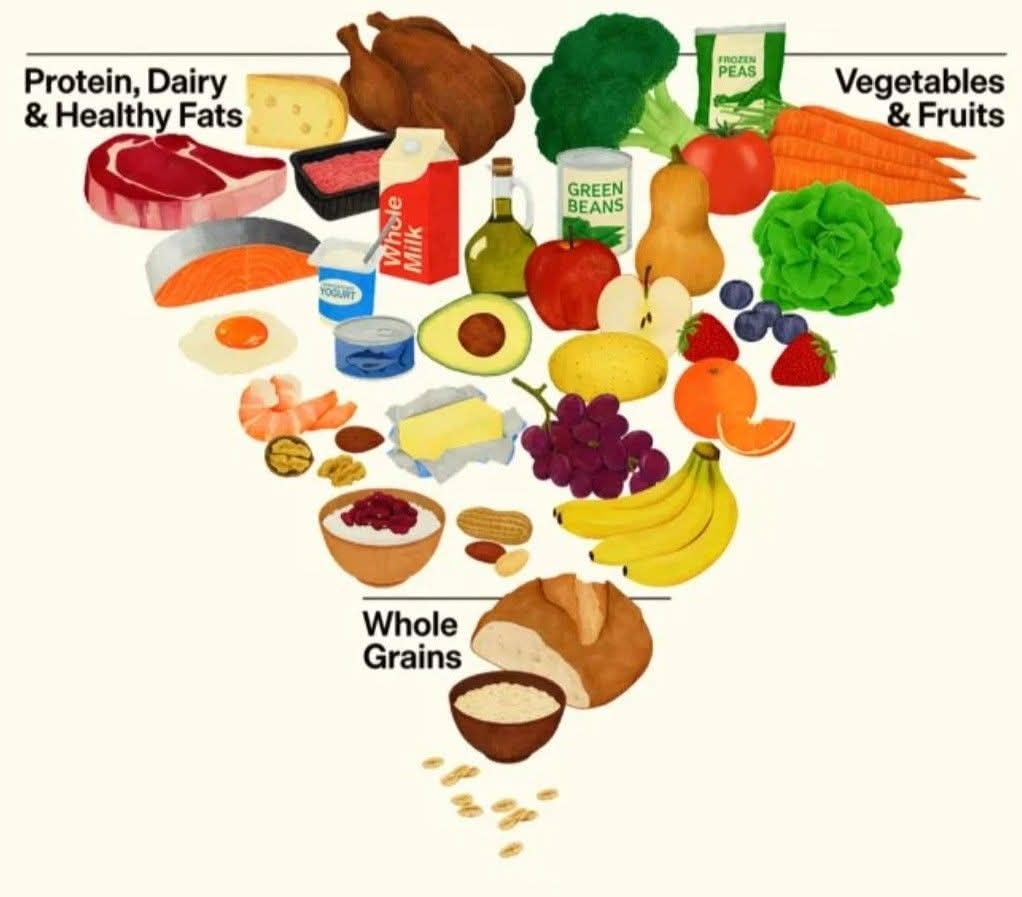
The new Dietary Guidelines flip that structure into an inverted pyramid that prioritizes nutrient density, blood sugar balance, and metabolic health.
In other words: We now build meals from the top down, not the bottom up.
What the New Inverted Pyramid Prioritizes
1. Vegetables Are the Foundation (Not an Afterthought)
Non-starchy vegetables now form the largest portion of the plate. This includes leafy greens, cruciferous vegetables, peppers, onions, squash, mushrooms, and herbs.
Why the change? Vegetables deliver fiber, antioxidants, minerals, and phytonutrients that:
- Reduce chronic inflammation
- Support gut health and detox pathways
- Feed beneficial gut bacteria
- Improve insulin sensitivity
This is especially important for women 40+, when inflammation and blood sugar dysregulation begin to accelerate aging and fatigue.
2. Protein Is Elevated to a Primary Role
Protein is no longer a “side” but a cornerstone.
The new guidelines emphasize adequate, high-quality protein from:
- Fish and seafood
- Eggs
- Poultry
- Lean meats
- Legumes
- Dairy (if tolerated)
- Plant-based protein combinations
Protein supports muscle preservation, stable blood sugar, hormone production, brain health, and metabolic rate, all things that naturally decline with age if not supported.
This shift alone is a game changer for women struggling with cravings, weight gain, and energy crashes.
3. Healthy Fats Are Recognized as Essential
The old pyramid treated fats as something to limit. The new model recognizes healthy fats as essential for:
- Brain health
- Hormone balance
- Satiety
- Nutrient absorption
- Nervous system regulation
Sources like olive oil, avocado, nuts, seeds, and fatty fish now have a clear place on the plate. These fats are not something to fear.
4. Whole Grains Are Still Included… but in Proper Proportion
Grains are no longer the base of the diet. Instead, they are optional and balanced with protein, fat, and fiber.
This matters because excess refined carbohydrates are one of the biggest drivers of insulin resistance and inflammation, especially in women navigating perimenopause and menopause.
The focus is now on quality over quantity, choosing whole, minimally processed options and appropriate portions.
5. Added Sugars Are Explicitly Limited
One of the most important updates in the new Dietary Guidelines is a stronger emphasis on limiting added sugars. Research now clearly links excess sugar to:
- Fatty liver disease
- Hormonal imbalance
- Gut dysbiosis
- Brain inflammation
- Heart disease
This is where many women finally feel seen. It’s not about willpower. It’s about biology. The new model supports reducing sugar in a sustainable, realistic way.
Need help to significantly reduce the amount of sugar in your diet without feeling restricted? My 3-Day Sugar Reset walks you step-by-step through simple changes that calm cravings, stabilize blood sugar, and help you feel better fast, without dieting, counting, or giving up real food. Click here to learn more!
Why This Matters for Us, Women 40+
Midlife health requires a different approach than diet culture taught us.
You don’t need to eat less. You need to eat smarter.
You don’t need to restrict. You need to stabilize.
You don’t need perfection. You need consistency with the right foundation.
The inverted pyramid supports:
- Stable energy all day
- Fewer cravings
- Better sleep
- Improved digestion
- Stronger muscles and bones
- Clearer thinking
- Healthier aging
And most importantly: It supports a relationship with food that feels nourishing instead of exhausting.
How to Start Using the Inverted Pyramid Today
This image is just a visual concept meant to illustrate the general direction of the new food pyramid updates. It is not an official or final guideline; however, you do not need to over complicate it. You can start with simple shifts like the ones below…
- Build meals around vegetables and protein first
- Add healthy fats for satisfaction
- Choose whole carbs intentionally
- Reduce added sugars gradually
- Eat in a way that supports your blood sugar, not spikes it
This is exactly why I created my 3-Day Sugar Reset: To help women transition gently into this new way of eating without overwhelm, restriction, or guilt. Small changes, done consistently, create powerful results.
Final Thoughts
The new Dietary Guidelines are not a trend. They’re a smart correction.
A return to food that fuels your cells, supports your hormones, and gives you your energy back.
And when you build your plate from the top down, everything else begins to fall into place.