
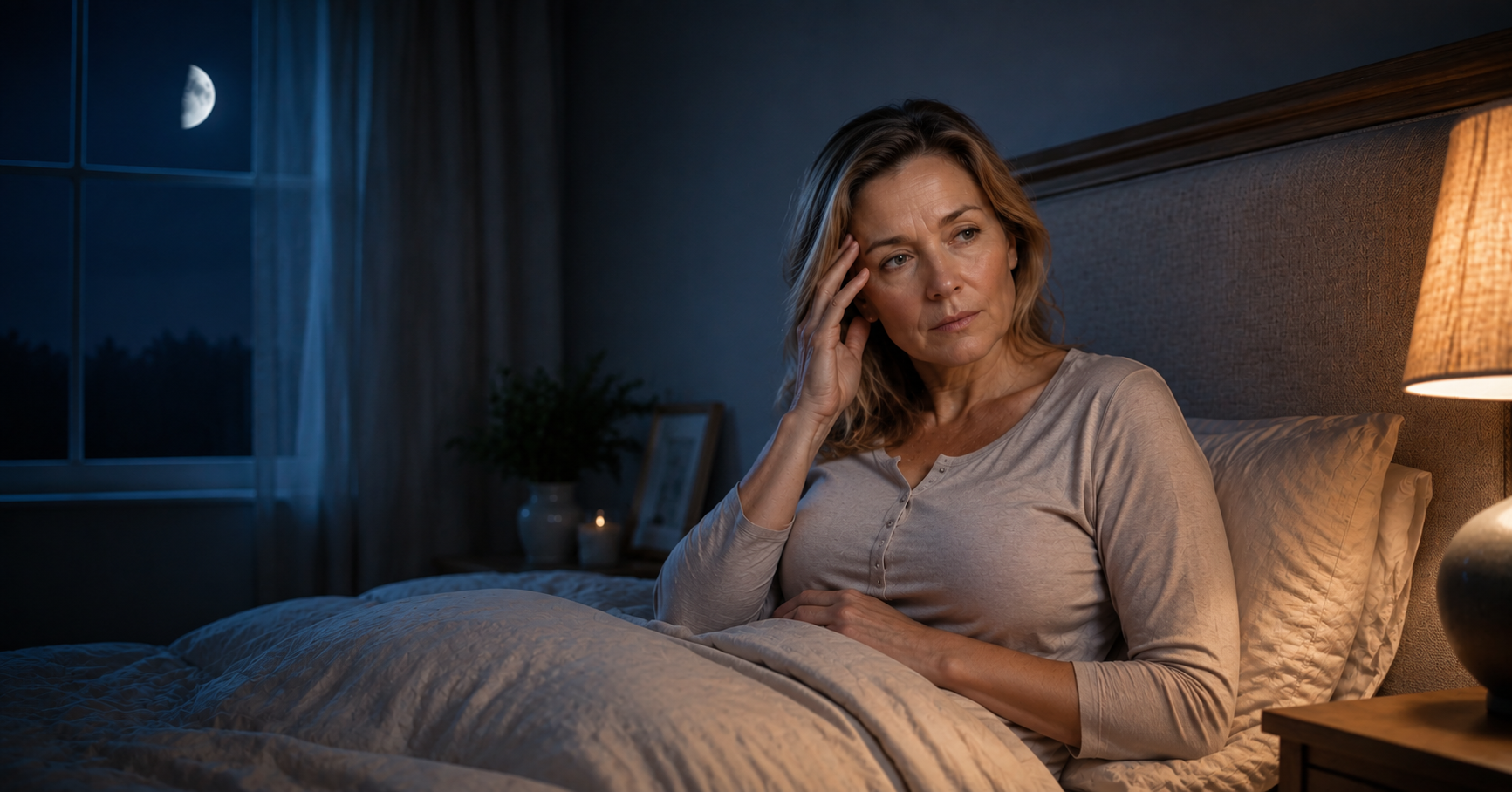
You are eating nutritious foods. You have not suddenly started overeating. Yet your waistline is changing, your energy is lower, and the strategies that once helped you maintain your weight no longer seem to work. If you are a woman over 45 and you are also sleeping poorly or living through prolonged stress, cortisol may be part of the picture.
This does not mean that cortisol is solely responsible for every extra pound. Midlife weight changes are usually influenced by several factors, including declining estrogen, loss of muscle, changes in activity, disrupted sleep and insulin sensitivity. However, poor sleep can interfere with the body’s normal cortisol rhythm, and that can make weight regulation considerably more difficult, even when your diet is generally healthy.
Cortisol is Not the Enemy
Cortisol is an essential hormone produced by the adrenal glands. It helps regulate blood pressure, blood sugar, inflammation, energy availability and the body’s response to physical and emotional challenges.
Under normal circumstances, cortisol follows a daily rhythm:
- It rises in the morning to help you wake up and become alert.
- It gradually falls throughout the day.
- It should be relatively low at night so your body can rest and recover.
The problem is not that your body produces cortisol. The problem begins when stress, insufficient sleep or repeated nighttime awakenings interfere with that rhythm.
Research shows that substantial sleep restriction can increase cortisol later in the day and evening, precisely when it should be declining. Sleep fragmentation, which is common during perimenopause and menopause, may also disrupt the system that controls the body’s stress response. You may begin to feel “tired but wired”: exhausted during the day but unable to fully relax at night
How Poor Sleep Can Encourage Weight Gain
One bad night will not permanently damage your metabolism. But when poor sleep becomes a pattern, several things may happen at the same time.
Your appetite signals can change
Insufficient sleep can increase hunger and make highly rewarding foods more difficult to resist. You may also require more food to feel satisfied. This can happen so subtly that you may not recognize it as overeating. An extra handful of nuts, larger portions of healthy food, more frequent snacks or slightly increased weekend eating can add up over time.
Your body may handle glucose less efficiently
Poor sleep can temporarily reduce insulin sensitivity. This means the body may have more difficulty moving glucose out of the bloodstream and into the cells where it can be used for energy. Over time, this can favor fat storage and make weight loss more difficult.
Elevated evening cortisol may interfere with recovery
When cortisol remains elevated later than it should, the body receives the message that it still needs to remain alert. This can perpetuate nighttime wakefulness, creating a cycle: Poor sleep increases physiological stress, and physiological stress makes restorative sleep more difficult.
Fat may shift toward the abdomen
Declining estrogen during menopause already encourages more fat to be stored around the abdomen. Stress, sleep disruption, reduced insulin sensitivity and age-related muscle loss can intensify this change.
You may move less without realizing it
After a poor night’s sleep, formal exercise is not the only activity that declines. You may also stand less, walk less, postpone errands or sit for longer periods. This reduction in ordinary daily movement can affect energy balance even when your diet has not changed. This is why “just eat less” is often incomplete advice for a woman whose body is under-recovered.
Can You Lower Cortisol Naturally?
There is no single food, tea or supplement that reliably “flushes cortisol” out of the body. Cortisol is also not a toxin that needs to be cleansed. The realistic goal is to help the body restore an appropriate daily rhythm: higher when you need energy in the morning and lower when it is time to recover at night. That requires more than simply telling yourself to stop stressing. It means giving your brain and body repeated physical signals that the emergency has passed. The following strategies are practical, medication-free and easy to begin at home.
1. Give Your Brain a Strong Morning Signal
Within approximately one hour of waking, spend 10 to 20 minutes outdoors. You do not have to exercise. You can drink your morning beverage on the patio, water the plants or take a short walk. Outdoor morning light helps anchor the body’s internal clock. This supports the normal timing of cortisol during the day and melatonin later at night.
Light through a window is generally less effective than being outdoors. On a cloudy morning, you may need a little longer. Try to wake at approximately the same time every day. A stable waking time is often more useful for resetting the body clock than forcing an early bedtime when you are not sleepy.
2. Use a Five-Minute Physiological “Off Switch”
Telling yourself to relax is rarely effective because the stress response is physical, not merely mental. Slow breathing provides the nervous system with a direct physical signal of safety. Try this twice a day:
- Sit comfortably and relax your shoulders.
- Breathe gently through your nose.
- Inhale for approximately four seconds.
- Exhale for approximately six seconds.
- Continue for five minutes without forcing a deep breath.
The slightly longer exhalation encourages the body’s calming response. If counting makes you tense, simply breathe more slowly and allow the exhale to last slightly longer than the inhale.
Use this practice before meals, after work or whenever you notice yourself rushing. Do not save it exclusively for bedtime. Practicing during the day helps prevent stress activation from accumulating until night. If slow breathing makes you dizzy, return to your normal breathing pattern.
3. Walk for 10 Minutes After One or Two Meals
A short walk after eating is one of the simplest ways to support glucose regulation while also giving the body a mild outlet for stress hormones. You do not need a gym or special clothing. Walk around the block, through your home, inside a shopping center or up and down your driveway.
Start with 10 minutes after dinner. If that feels manageable, add another short walk after breakfast or lunch. The purpose is not to burn off everything you ate. It is to help your muscles use circulating glucose and to add calm, regular movement without exhausting an already stressed body.
4. Stop Using Intense Exercise as Punishment
Exercise is beneficial, but more is not always better when a woman is sleeping poorly and feels depleted. Hard exercise temporarily raises cortisol because exercise itself is a controlled physical stress. A healthy body normally recovers from that challenge. But frequent high-intensity workouts combined with insufficient sleep, aggressive dieting and emotional stress can leave some women feeling more exhausted, hungrier and less able to recover.
You do not necessarily need to stop vigorous exercise. Instead, match the intensity to your current capacity. On poorly rested days, consider:
- Walking
- Gentle cycling
- Mobility exercises
- Restorative yoga
- Light-to-moderate resistance training
- Stretching combined with slow breathing
Save demanding sessions for days when you are adequately recovered. Two or three manageable strength-training sessions each week can be especially valuable after 45 because maintaining muscle supports metabolism, glucose control, strength and healthy aging.
5. Avoid Combining Poor Sleep With Severe Food Restriction
A common response to unexplained weight gain is to eat dramatically less, skip multiple meals or eliminate entire food groups. That approach may backfire when you are already under physiological stress. Excessive restriction can increase fatigue, preoccupation with food and loss of muscle. It may also lead to evening hunger or overeating after several highly controlled days. Instead, build regular meals around:
- A meaningful source of protein
- Vegetables or fruit
- A fiber-rich carbohydrate when appropriate
- A moderate source of healthy fat
Examples include eggs with vegetables and whole-grain toast, Greek yogurt with berries and seeds, chicken with beans and vegetables, or fish with roasted vegetables and a small potato. A healthy diet still needs appropriate portions, but the goal is steady nourishment, not forcing the body through a cycle of restriction and rebound eating.
6. Move Caffeine Earlier
Caffeine can remain active much longer than people realize. Its average half-life is approximately five to six hours and may be longer in some individuals. If you drink coffee at 3:00 p.m., a substantial amount may still be affecting you at bedtime, even if you can fall asleep. Try a two-week experiment:
- Keep your usual morning coffee.
- Avoid caffeine after noon.
- Remember that tea, chocolate, energy drinks and some headache products also contain caffeine.
- Notice whether nighttime awakenings or early-morning waking improve.
This is not about giving up something you enjoy. It is about determining whether your present caffeine schedule is keeping your stress system activated later than you realize.
7. Reconsider the Evening Glass of Wine
Alcohol may make you feel sleepy initially, but it can fragment sleep later in the night. It may also worsen hot flashes, snoring and breathing-related sleep problems in susceptible women. If you drink alcohol regularly, try removing it for two weeks rather than merely cutting back for one or two nights. Observe changes in:
- Nighttime awakenings
- Sweating or hot flashes
- Morning energy
- Resting heart rate
- Food cravings
- Abdominal bloating
This short experiment can reveal more than guessing whether alcohol affects you.
8. Create a Daily “Stress Completion” Ritual
Many women finish their workday physically, but their minds remain at work for hours. Choose a simple 10-to-15-minute ritual that marks the end of responsibility for the day:
- Write tomorrow’s priorities on paper.
- List unresolved concerns and the next action for each.
- Change clothes and take a short walk.
- Stretch while listening to one calming song.
- Take a warm shower followed by five minutes of slow breathing.
- Practice gentle yoga or guided relaxation.
Writing down unfinished tasks is especially useful because your brain no longer has to rehearse them repeatedly to avoid forgetting them. The ritual should be easy enough to repeat, not another wellness assignment you feel guilty about missing.
9. Look for the Cause of the Poor Sleep
Sometimes “stress” receives the blame for a physical problem that needs attention. Women in midlife may experience sleep disruption from:
- Hot flashes or night sweats
- Obstructive sleep apnea
- Restless legs
- Thyroid problems
- Pain
- Depression or anxiety
- Reflux
- Frequent urination
- Medication side effects
Sleep apnea in women does not always look like loud, obvious snoring. It may appear as insomnia, morning headaches, dry mouth, fatigue, difficulty concentrating or repeatedly waking during the night. If you wake choking or gasping, snore heavily, experience excessive daytime sleepiness, or continue sleeping poorly despite making reasonable changes, ask a healthcare professional about a sleep evaluation.
Cognitive behavioral therapy for insomnia, known as CBT-I, is a medication-free treatment that addresses persistent insomnia more effectively than sleep-hygiene tips alone. It can be provided by a trained professional and is also available through structured digital programs.
A Simple Two-Week Cortisol-Supporting Routine
You do not need to change your entire life at once. Try this basic routine consistently for 14 days:
Morning
- Wake at approximately the same time.
- Go outdoors for 10 to 20 minutes.
- Eat a protein-containing first meal when you are hungry.
- Keep caffeine to the morning.
During the day
- Practice five minutes of slow breathing once before lunch.
- Eat regular, balanced meals instead of compensating with severe restriction.
- Take a 10-minute walk after one or two meals.
- Choose moderate movement if you slept poorly.
Evening
- Avoid alcohol during the experiment.
- Write down tomorrow’s tasks.
- Practice another five minutes of slow breathing or gentle stretching.
- Reduce bright light and stimulating activity during the final hour before bed.
Track only a few indicators: nighttime awakenings, morning energy, cravings, mood, waist comfort and how recovered you feel. Daily weight can fluctuate because of fluid, digestion and hormonal changes, so it should not be the only measure of progress.
When “High Cortisol” Needs Medical Evaluation
Chronic stress and poor sleep are not the same as Cushing’s syndrome, a rare medical condition involving abnormal cortisol excess. Do not rely on a commercial home cortisol test to diagnose the cause of weight gain. Cortisol changes throughout the day and can be affected by sleep, illness, medications, exercise and the timing of the sample. Speak with a qualified healthcare professional if weight gain is rapid or accompanied by symptoms such as:
- Easy or unusual bruising
- Wide purple or reddish stretch marksemo
- Significant muscle weakness
- A noticeably rounder face
- New or difficult-to-control high blood pressure
- High blood sugar
- Loss of bone density
- Increased facial hair combined with other progressive symptoms
A clinician can determine whether testing is appropriate and which test should be used.
The Bottom Line
If you are eating well but gaining weight during a period of poor sleep and prolonged stress, your experience is real, but it is probably not the result of one hormone acting alone.
Cortisol, estrogen changes, muscle loss, insulin sensitivity, appetite, recovery and everyday movement can all interact after 45. The answer is not to punish your body with less food and more exhausting exercise. Start by restoring the signals that tell your body when to be alert, when to use energy and when it is safe to recover.
Morning light, slow breathing, post-meal walking, appropriate exercise intensity, regular nourishment, earlier caffeine and a deliberate end-of-day ritual may seem simple. Their strength comes from repetition. Your body may not return to an earlier version of itself overnight. But when you reduce the pressures keeping it in a prolonged state of alert, you create better conditions for energy, sleep, metabolic health and weight regulation to improve.
Reviewed by Coach Tammy
Coach Tammy Bar is a Certified Life Coach, Health Coach, Type 2 Diabetes Educator, and Humanistic Psychology Counselor with over 25 years of experience in health promotion through education.
She coaches women to improve their energy, metabolic health, and sustain healthy lifestyle habits. She helps women navigate midlife transitions, including blood sugar balance, hormone health, weight management, and lifestyle strategies that promote long-term vitality. Her approach combines science-based nutrition, behavioral psychology, and practical daily routines designed for real life.
Through TBHealthy, Coach Tammy educates women simplify health decisions and build habits that support energy, clarity, and resilience during hormonal changes such as perimenopause and menopause.
Medical Disclaimer: This article is for educational purposes only and does not replace personalized medical advice. Always consult your healthcare provider regarding medical conditions or treatment decisions.
Frequently Asked Questions Re: Cortisol and Weight Gain
Can poor sleep really increase cortisol?
Yes. Significant sleep restriction and repeated nighttime awakenings can disrupt the body’s normal cortisol rhythm. In some people, this results in cortisol remaining higher later in the day or evening, when it should normally be declining. This does not mean that every woman with insomnia has medically abnormal cortisol levels. It means that poor sleep can place the body under additional physiological stress.
Can high cortisol cause weight gain even if I eat a healthy diet?
Cortisol may contribute to weight gain, but it usually does not act alone. Poor sleep and prolonged stress can affect appetite, insulin sensitivity, food choices, energy levels and daily movement. A nutritious diet remains important, but healthy foods can still provide more energy than your body currently uses. Hormonal changes and loss of muscle after 45 may also make weight management more difficult than it was in earlier years.
How can I lower cortisol naturally at home?
There is no single food or home remedy that instantly lowers cortisol. The most useful approach is to support a healthier daily rhythm through consistent morning light, moderate exercise, slow breathing, regular meals, earlier caffeine and reduced alcohol. Short post-meal walks and a deliberate end-of-day ritual can also help your body transition from activity into recovery.
How long does it take for cortisol to return to normal?
There is no universal timeline because cortisol changes throughout the day and responds to sleep, illness, exercise, medications and emotional stress. Some women may notice improvements in sleep, cravings or energy after a few weeks of consistent lifestyle changes. If symptoms continue or become progressively worse, seek a medical evaluation instead of assuming that cortisol is the sole cause.
Is belly fat after menopause always caused by cortisol?
No. Declining estrogen can change where the body stores fat, making abdominal weight gain more common during and after menopause. Aging, muscle loss, insulin resistance, sleep disruption, stress and changes in activity can also contribute. Cortisol may be part of the picture, but blaming it for all abdominal weight gain oversimplifies a complex process.
Should I take supplements to lower cortisol?
Be cautious with supplements marketed as “cortisol blockers” or “adrenal support.” Their effectiveness may be uncertain, and some ingredients can interact with medications or affect blood pressure, thyroid function, blood sugar or the liver. Discuss supplements with a qualified healthcare professional, particularly if you take medication or have an existing medical condition.
When should I ask a doctor to test my cortisol?
Speak with a healthcare professional if you experience rapid or unusual weight gain accompanied by significant muscle weakness, easy bruising, wide purple stretch marks, high blood pressure, elevated blood sugar or other progressive symptoms. Cortisol fluctuates naturally, so one random blood or home saliva test may not provide a meaningful answer. A clinician can determine whether testing is warranted and select the appropriate method.